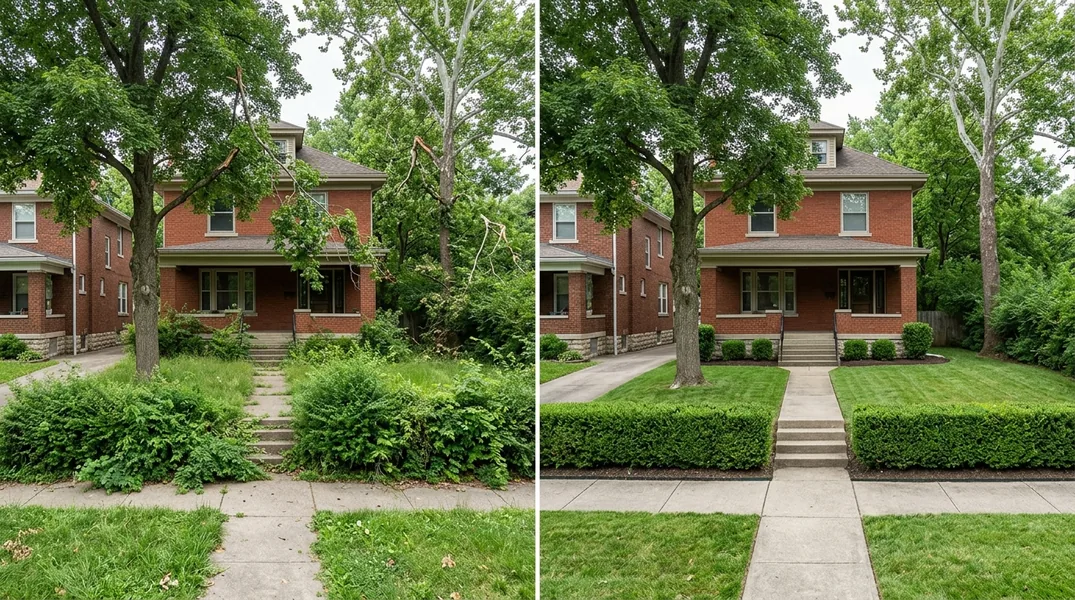
Tree Trimming vs Tree Removal: Understanding Your Options
As a homeowner in Cincinnati, you've probably stood in your yard and wondered whether that overgrown oak or struggling maple needs to come down or simply needs some care. The decision between Tree Trimming & Pruning and Tree Removal isn't always obvious, and making the wrong choice can cost you thousands of dollars or leave you with a hazardous tree on your property.
The good news is that many trees that appear to be dying or damaged can actually be saved with proper care and professional assessment. However, some trees are genuinely beyond help and pose safety risks to your home, family, and neighbors. Understanding the difference is crucial. Most homeowners benefit from having a certified arborist evaluate their trees before making any drastic decisions. A professional can identify whether your tree is experiencing a temporary setback that responds well to trimming, or whether it's facing irreversible decline that makes removal the safer choice.
Signs Your Tree Can Be Saved with Professional Trimming
Many trees in the Cincinnati area suffer from overgrowth, storm damage, or poor structure that can be corrected through strategic pruning. If your tree has broken or crossing branches, is rubbing against your roof or power lines, or has become so dense that sunlight can't reach your lawn, it's usually a candidate for trimming rather than removal. Trees with these issues often respond remarkably well to professional pruning, regaining their health and structural integrity within one to two growing seasons.
Another positive sign is if your tree is still producing new growth, has green foliage on most of its branches, and shows signs of active life. Trees that have experienced recent storm damage, disease, or pest problems can often recover if the damaged portions are removed and the tree is given time to compartmentalize the wound. Even trees with significant lean or uneven branching can frequently be corrected through careful, phased pruning over multiple years. The key is that the tree must still have the biological capacity to heal and grow. If your tree meets these criteria, investing in professional Tree Trimming & Pruning is almost always more cost-effective than removal and replanting.
Hazard Tree Assessment Cincinnati: When Removal Becomes Necessary
Not all trees can or should be saved, and that's where a hazard tree assessment becomes essential. A hazard tree is one that poses a genuine risk of failure or collapse that could damage your home, vehicle, or injure someone on your property. Common warning signs include large dead branches hanging over your house, significant trunk cavities or hollow sections, bark that is peeling away in large sections, or severe lean that has worsened over time. Trees that are actively dying from disease, insect infestation, or root damage may also be candidates for removal, particularly if the condition is spreading or if the tree is located near structures.
During a professional hazard tree assessment, an arborist evaluates the tree's overall health, structural integrity, and proximity to your home and property lines. They look for signs of decay, assess branch strength and attachment points, and consider environmental factors like soil stability and wind exposure. In Cincinnati, where we experience significant weather variability, trees weakened by ice storms, high winds, or flooding are particularly vulnerable to failure. If an assessment reveals that the tree has less than 50 percent of its crown remaining, has major structural defects, or shows advanced decay, removal is typically the safest and most responsible choice. Attempting to save a genuinely hazardous tree puts your family and property at unnecessary risk.
The Health and Age Factor: How Tree Condition Influences Your Decision
A tree's overall health and age play significant roles in determining whether it's worth saving. Young to middle-aged trees with good structure and minor damage are almost always worth preserving through trimming and care. These trees have decades of productive life ahead and can provide shade, property value, and environmental benefits for generations. Even a tree that has experienced substantial damage can often be brought back to health if it's young enough and the damage isn't catastrophic. However, very old trees that are declining naturally or have reached the end of their lifespan may be better candidates for removal, especially if they're becoming unstable or requiring increasingly expensive maintenance.
Trees suffering from untreatable diseases like Dutch elm disease or oak wilt, or those heavily infested with destructive pests, present a more complex decision. Sometimes these trees can be managed with ongoing care, but in other cases, removal is necessary to prevent the disease or pest from spreading to other trees on your property or in your neighborhood. A certified arborist can help you understand whether your tree's condition is temporary and treatable or permanent and progressive. They can also recommend whether removal is necessary for the health of your landscape as a whole. This assessment is invaluable for making an informed decision that protects both your tree and your property.
Cost Considerations: Tree Removal vs Trimming Investment
When faced with a problem tree, cost is often a primary consideration for homeowners. Professional Tree Trimming & Pruning typically ranges from a few hundred dollars for routine maintenance to $1,500 or more for complex work on large trees. This cost is an investment in the tree's future health and your property's safety and appearance. In contrast, Tree Removal can cost anywhere from $500 for small trees to $5,000 or more for large, complex removals, plus additional costs if Stump Grinding is needed. While removal is sometimes more expensive upfront, it's important to consider the long-term costs of maintaining a declining tree.
A tree that requires removal might have cost you $2,000 to $3,000 annually in pruning, pest management, and disease treatment over the next five to ten years, only to eventually fail anyway. In such cases, removal becomes the more economical choice. However, if trimming can restore your tree to health, you're making a smart investment in your landscape. The best approach is to get a professional free estimate from Cincinnati Tree Service. Our arborists can assess your specific situation and provide honest recommendations about whether trimming or removal makes the most financial and practical sense for your property.
Getting Professional Help: Your Next Steps
If you're uncertain about whether your tree should be trimmed or removed, the best decision is to call a professional. Cincinnati Tree Service offers comprehensive tree assessments that take the guesswork out of this important decision. Our certified arborists will evaluate your tree's health, structural integrity, and safety status, then provide clear recommendations based on industry standards and best practices. We'll explain what we find in language you can understand, not industry jargon, so you can make an informed decision with confidence.
Don't let uncertainty lead to a costly mistake or safety hazard. Whether your tree needs professional trimming to restore its health or removal to protect your property, we're here to help. Contact Cincinnati Tree Service today at (513) 657-2145 or visit our website to schedule your free estimate. Our team serves the greater Cincinnati area and is committed to helping you maintain a healthy, beautiful landscape that enhances your home for years to come.
Looking for a professional tree service in Cincinnati? Cincinnati Tree Service responds fast for all your tree service needs.
Get a Free QuoteOur services: Tree Removal · Tree Trimming & Pruning · Stump Grinding